

The essentials: A Galileo thermometer works because liquid density changes with temperature, making sealed glass bulbs rise or fall. Each bulb is weighted and calibrated at the factory so only specific bulbs float at specific temperatures, typically covering a 64°F to 80°F indoor range. You read the temperature from the lowest bulb still floating in […]
Category Archives: Objects of Science
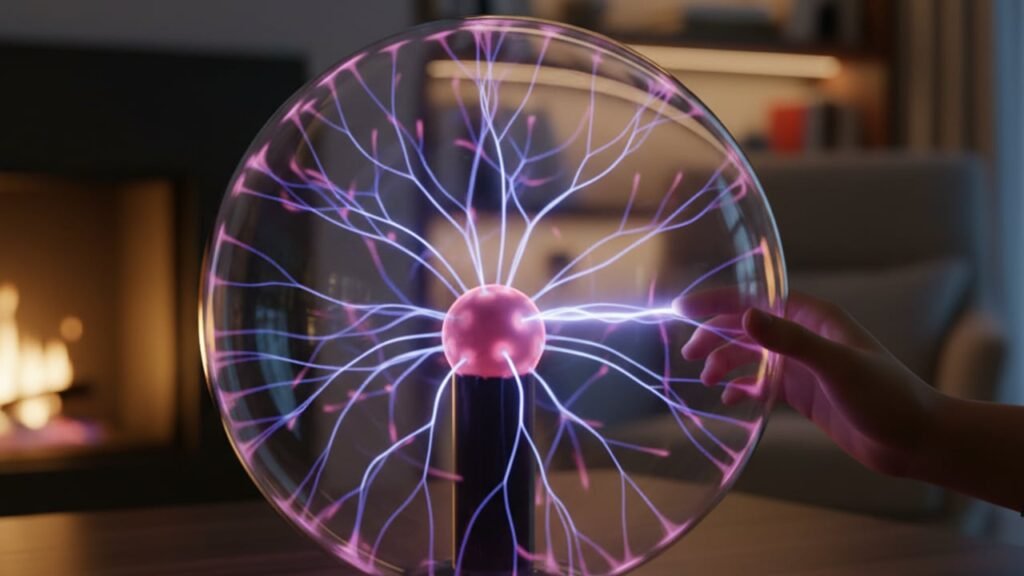
The essentials: A plasma ball works by applying 2,000 to 5,000 volts of high-frequency AC current (around 25 to 40 kHz) to a small electrode sealed inside a low-pressure gas mixture, usually neon and argon. That voltage ionizes the gas, stripping electrons from atoms and creating glowing, branching filaments called plasma tendrils. Touching the glass […]

The essentials: “Science tableware” covers two things: dinnerware printed with scientific motifs (molecular structures, periodic tables) and genuine science-themed objects used as table centerpieces. Heritage potteries like Portmeirion, from England’s Stoke-on-Trent “Potteries” district, produce botanical and pattern-led dinnerware, while niche sellers on Amazon and Etsy cover the molecular-print plates. For a truly conversational table, pair […]

The essentials: A 3D projector sends two slightly offset images to each eye so your brain reconstructs depth, using polarization, color-splitting (anaglyph) or active shutter glasses synced at 120Hz. The four main projector technologies are DLP, LCD, LCoS and laser, each handling 3D sync differently. A true “hologram projector” for the desktop isn’t a hologram […]

The essentials: Small, high-powered neodymium magnetic balls are genuinely dangerous if swallowed, especially by children under 14, because two or more magnets can attract through tissue and cause internal injuries. The US Consumer Product Safety Commission (CPSC) has issued repeated warnings, with recalls and a federal safety standard for magnet sets (16 CFR Part 1262, […]

The essentials: A quality Rubik’s cube in 2026 means checking three engineering features first: magnet strength, tension adjustability and corner cutting angle, not just the brand printed on the box. For casual fun, a stickerless budget cube under $15 is fine; for smooth, fast solving, magnetic cubes from Gan or MoYu ($20 to $45) are […]

The essentials: A levitating globe uses an electromagnetic base with a Hall effect sensor to hold a lightweight sphere in mid-air, continuously correcting for gravity thousands of times per second. Static magnets alone cannot achieve stable levitation, this is a physical law known as Earnshaw’s theorem (1842), which is why every genuine floating globe hides […]

The essentials: The best science gifts for adults in 2026 combine genuine physics or chemistry principles with striking design, think kinetic desk toys, storm glasses and real Tesla coil music devices rather than plastic novelty items. Segmenting by scientific interest (astronomy, physics, chemistry, puzzles) beats a generic top-10 list because adult buyers usually already know […]

The essentials: The best chemistry gifts combine genuine scientific principle with everyday usability, think storm glasses, real element samples, or desk-friendly lab-inspired décor rather than novelty mugs alone. Budget-wise, solid options start around $20 (brain teasers, magnetic sets) and climb past $70 for premium periodic table displays or Stirling engine kits. For students specifically, practical […]

The essentials: A Stirling engine kit is a build-it-yourself model engine that runs on temperature difference alone, no fuel, no batteries, no fumes. The four core parts are the displacer piston, power piston, flywheel and a heat source (candle, hot water or your own hand). Assembly typically takes 30 to 90 minutes and suits everyone […]