
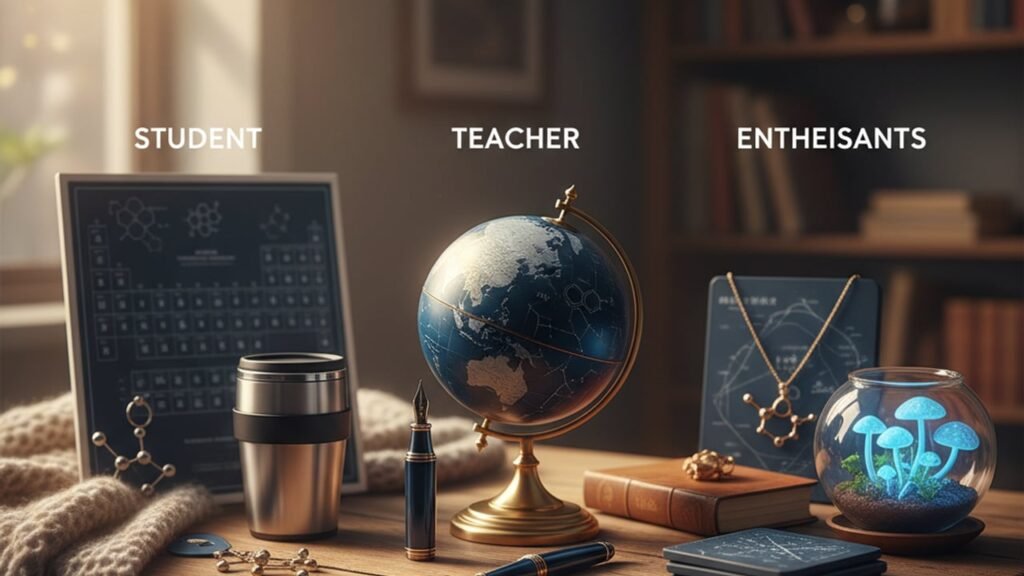
The essentials:
- The best chemistry gifts combine genuine scientific principle with everyday usability, think storm glasses, real element samples, or desk-friendly lab-inspired décor rather than novelty mugs alone.
- Budget-wise, solid options start around $20 (brain teasers, magnetic sets) and climb past $70 for premium periodic table displays or Stirling engine kits.
- For students specifically, practical desk companions that spark conversation during exam prep beat purely humorous items.
- A chemistry enthusiast is properly called a chemist, though casual American slang often just says science geek for the more eccentric lab-coat type.
Buying for someone obsessed with beakers, bonds and the periodic table is trickier than it looks. Search Etsy or Amazon and you’ll drown in identical $10 mugs printed with ‘chemistry jokes’ that get a polite laugh and then live in a cabinet forever. As someone who spent years translating chemistry for museum visitors before curating objects for the home, I’ve learned the difference between a gift that gets used once and one that earns a permanent spot on a desk or windowsill.
📋 Table of contents
This guide skips the novelty aisle and focuses on what actually works in 2026, structured by recipient and budget, with real historical grounding behind each suggestion.
What Is a Good Gift for a Chemist?
A good gift for a chemist is something that respects their intelligence while still being genuinely enjoyable to look at or handle, not a pun-based mug they’ll use twice. The strongest chemistry gifts sit at the intersection of real scientific principle and everyday desk life, which is why storm glasses and mineral or element displays consistently outperform joke items in long-term satisfaction.
Three categories work reliably well:
- Genuine specimens: real element samples, mineral cuts, or crystal formations that reference actual chemistry rather than parody it.
- Weather and physics curiosities: objects like a Storm Glass Weather Predictor that demonstrate crystallization and solution chemistry in a decorative form.
- Desk-scale engineering: kinetic or thermodynamic devices such as a DIY Stirling Engine Kit, which turns a temperature difference into visible motion.
💡 Did you know?
The storm glass, a sealed liquid mixture that forms crystals in response to temperature and pressure changes, was popularized in the 1850s by Robert FitzRoy, captain of HMS Beagle and founder of what later became the UK Met Office. Sailors used it as an early weather predictor decades before barometric science was fully understood.
Our Crystal Storm Glass Barometer follows that same principle in a shape that looks equally at home on a chemist’s shelf or a general science lover’s mantel, which is part of why it crosses over so well between audiences.
What Are Good Presents for Chemistry Students?
Good presents for chemistry students are practical, durable objects that survive a shared apartment and still look sharp on a study desk. Students respond best to gifts that double as functional décor, since dorm rooms and shared apartments have little space for anything purely decorative.
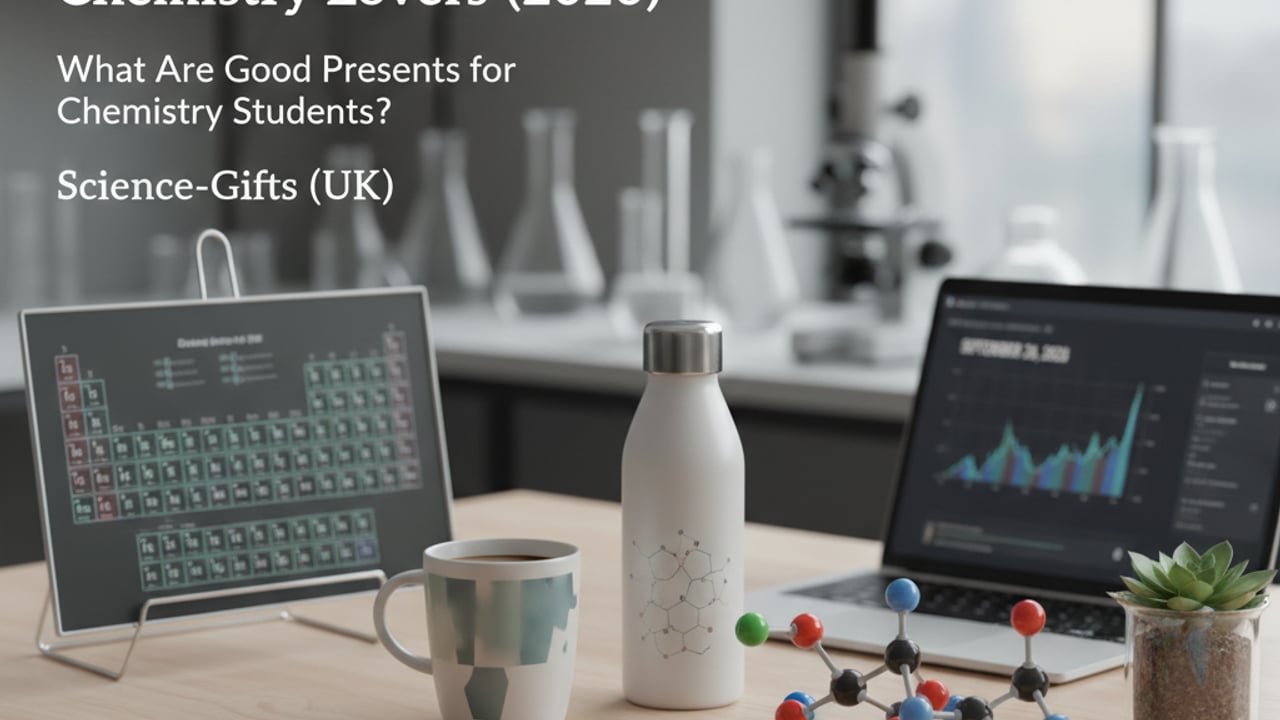
| Budget | Suggested gift | Why it works |
|---|---|---|
| Under $30 | Pyramid Brain Teaser | Fits any desk, exercises spatial logic between study sessions |
| $25 to $40 | Rainbow Magnetic Balls | Stress relief plus a hands-on lesson in magnetic fields |
| $40 to $80 | DIY Stirling Engine Kit | A working demonstration of thermodynamics they’ll actually keep |
| $80 plus | Periodic Table With Real Elements Samples | Genuine specimens of actual elements, not a printed poster |
⭐ Key takeaway
If you only remember one thing from this guide, prioritize objects with a genuine scientific mechanism over anything purely printed or joke-based. Students see through novelty fast, but a real periodic table with actual element samples still gets picked up months later.
The subject’s history makes for good gift stories too. In Manchester, England, John Dalton developed the foundations of modern atomic theory in 1803, and in 2004 Andre Geim and Konstantin Novoselov isolated graphene at the University of Manchester, work that earned them the Nobel Prize in Physics in 2010.
Gifts for Chemistry Teachers
Chemistry teachers appreciate gifts that acknowledge the subject’s history rather than reduce it to classroom clichés. Teachers who’ve spent years surrounded by safety goggles and Bunsen burners tend to value objects that bring a sense of wonder back into the subject, rather than another mug referencing the periodic table.

🛍️ Our pick
Kinetic Desk Toy The Balancer
The Balancer demonstrates principles of physics and chemistry through kinetic motion and balance.
[sg_price id=”222″] Shop now →
- A Tesla Coil Music device references Nikola Tesla’s 1891 invention and works as a genuine conversation starter for a teachers’ lounge desk.
- A Magnetic Perpetual Calendar suits the organized, detail-oriented mindset most chemistry teachers share.
- Anything from the Cool Gadgets range tends to work well as an end-of-year thank-you gift from a class or department.
Premium and Experiential Chemistry Gifts
Premium chemistry gifts go beyond desk décor into equipment-grade objects and hands-on kits that reward genuine chemical curiosity. For recipients who already own the obvious desk items, moving toward engineering-grade kinetic objects or genuine mineral and element collections tends to land better than another decorative piece.

The Periodic Table With Real Elements Samples sits firmly in this tier since it contains actual specimens rather than illustrations, referencing Dmitri Mendeleev’s original 1869 periodic table, a document that correctly predicted the properties of elements not yet discovered. As of 2016, the International Union of Pure and Applied Chemistry (IUPAC) confirmed all 118 elements currently recognized, with the most recent additions, nihonium, moscovium, tennessine and oganesson, only formally named that year.
💡 Did you know?
The Royal Society of Chemistry, the UK’s professional body for the discipline, represents over 50,000 members across more than 100 countries, making it one of the largest chemistry organizations in the world.
For a more mechanical form of premium gift, a DIY Stirling Engine Kit demonstrates the same convection and thermodynamic principles that powered early industrial engines, built to a scale that fits on a bookshelf.
What Is a Chemistry Lover Called?
A person who studies or loves chemistry is called a chemist, a term dating back to the 17th century and derived from alchemy. In more casual American usage, an enthusiastic amateur scientist is often affectionately called a science geek, though the term applies broadly across physics, engineering and chemistry rather than to chemistry alone.
If you’re shopping for someone who identifies more as a science generalist than a strict chemist, that distinction matters less than the object itself. A Magnetic Solar System or Triangular Glass Prism crosses disciplines comfortably and suits anyone who enjoys science broadly rather than one narrow field.
Best Gifts for Science Students in General
The best gifts for science students beyond chemistry specifically are objects that demonstrate a physical principle rather than simply reference one in text. Kinetic and magnetic desk objects consistently outperform printed merchandise because they invite handling, which is exactly what keeps a gift on a desk instead of in a drawer.
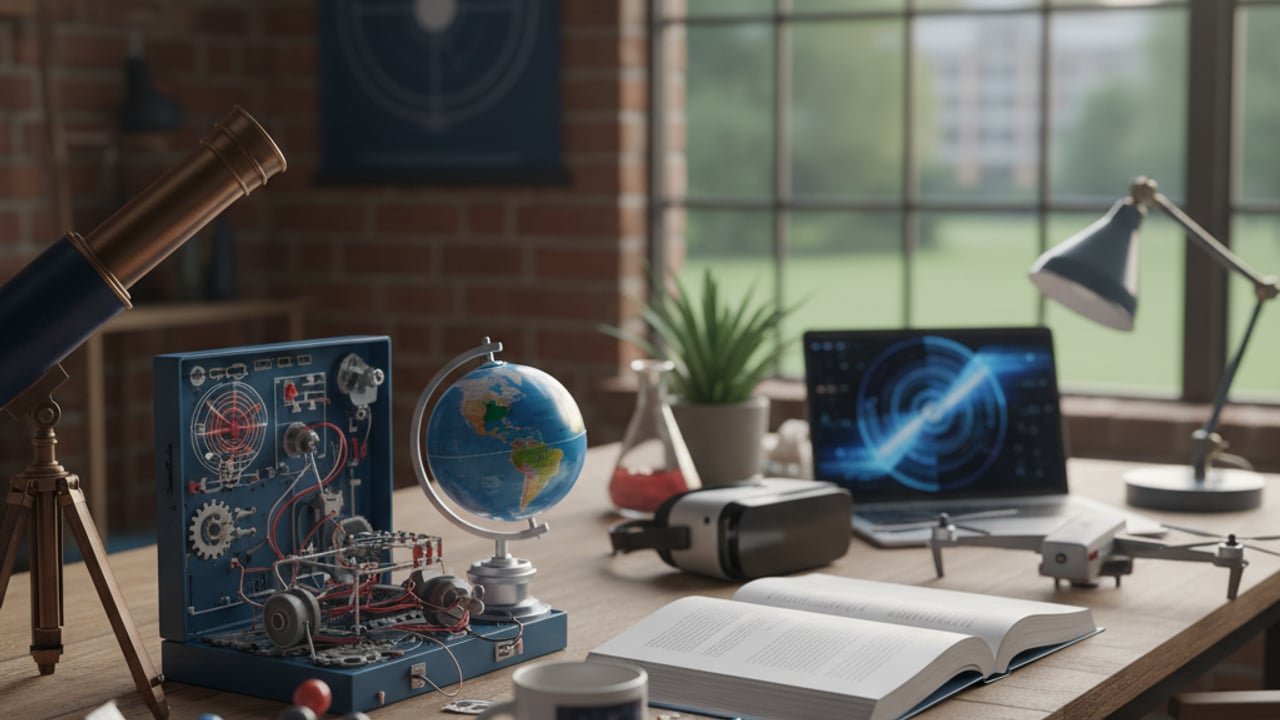
- Magnetic Balls sets teach basic magnetism through direct manipulation
- Brain Teasers appeal to engineering and math students as much as chemists
- Tensegrity Lego demonstrates structural physics in a build-it-yourself format
Our Verdict
After years of curating scientific objects for the home, my honest take is this: skip anything whose only selling point is a chemistry pun. The gifts that actually get displayed, discussed and used years later are the ones tied to a real mechanism, a real specimen, or a real piece of scientific history. A Storm Glass Weather Predictor or a genuine periodic table with real samples will outlast a printed mug by years, both in shelf life and in how often it sparks a proper conversation.
FAQ
After exploring chemistry gifts, why not elevate your lab or dining experience with unique science tableware?
Sources
- Royal Society of Chemistry, membership and organizational figures
- International Union of Pure and Applied Chemistry (IUPAC), periodic table element confirmations, 2016