
The essential:
- Skip anything that looks like lab equipment: your graduate has already handled oscilloscopes, multimeters, and safety goggles for four years straight.
- The best gifts celebrate physics as wonder, not work: think kinetic sculptures, magnetic art, and desk pieces that spark conversation instead of flashbacks to problem sets.
- Match the gift to their personality: a theorist loves topology puzzles like a Klein Bottle, while a hands-on tinkerer gravitates toward a Solar Stirling Engine.
- Budget range for a meaningful graduation gift sits between $40 and $280, depending on how much ‘wow factor’ you want on the shelf.
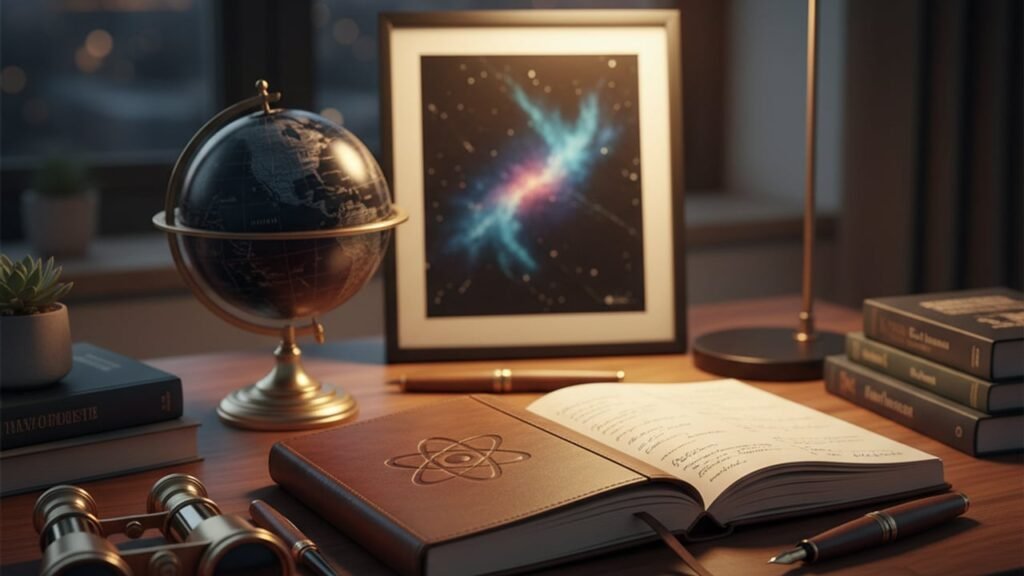
Four years of problem sets, lab reports, and 2 a.m. study sessions deserve a better send-off than another branded water bottle or a generic multimeter they’ll never use outside the classroom. If your physics graduate already owns a telescope, a decent calculator, and every lab tool a department could hand out, the real gift is something that reconnects them with why they fell in love with physics in the first place. That’s where kinetic art, magnetic sculpture, and conversation-starting desk pieces come in.
📋 Table of contents
- Why Do Typical Lab Gadgets Fall Flat as Graduation Gifts?
- What Does a Physics Major Actually Want Beyond the Lab?
- Best Statement-Piece Gifts for a Physics Lover’s Desk or Shelf
- How Do You Choose by Personality: Theorist vs Tinkerer vs Decorator?
- How Much Should You Spend on a Physics Graduate’s Gift?
- Our Take
- Frequently Asked Questions
Why Do Typical Lab Gadgets Fall Flat as Graduation Gifts?
Lab gadgets fail as graduation gifts because they remind graduates of coursework instead of celebrating the milestone of finishing it. A multimeter, a lab coat, or a generic scientific calculator signals ‘more of the same,’ not ‘congratulations on four incredible years.’ Physics majors spend their undergraduate careers surrounded by functional, utilitarian equipment, so a gift that leans into beauty and curiosity instead of utility actually lands as more thoughtful, not less. According to gift-giving research cited by retailers like the National Retail Federation, graduation spending in the US averages well above $100 per gift for close family members, which gives you room to go beyond the department store science aisle.
💡 Did you know?
The Newton’s Cradle, a staple of physics desks worldwide, wasn’t named after Isaac Newton until 1967, when English actor Simon Prebble coined the term while marketing a version of the device, even though the underlying principle of conservation of momentum dates back to 17th-century physicist Christiaan Huygens.
What Does a Physics Major Actually Want Beyond the Lab?
Most physics majors want objects that let them see physics in action without opening a textbook. After years of deriving equations on whiteboards, there’s something deeply satisfying about watching a phenomenon play out in real time on a shelf or desk. The sweet spot is a gift that demonstrates a real physical principle, magnetism, momentum, fluid dynamics, gyroscopic precession, but does it as a design object rather than a classroom prop. That’s the gap most generic graduation gift guides miss entirely: they focus on tech gadgets and lifestyle upgrades, ignoring the specific joy a physics person gets from watching a system behave exactly the way their coursework predicted.
Best Statement-Piece Gifts for a Physics Lover’s Desk or Shelf
The best statement gifts for a physics graduate combine genuine scientific principles with striking visual design, something that works as decor and as a demonstration. Here’s a curated shortlist organized by the physics concept each piece showcases.
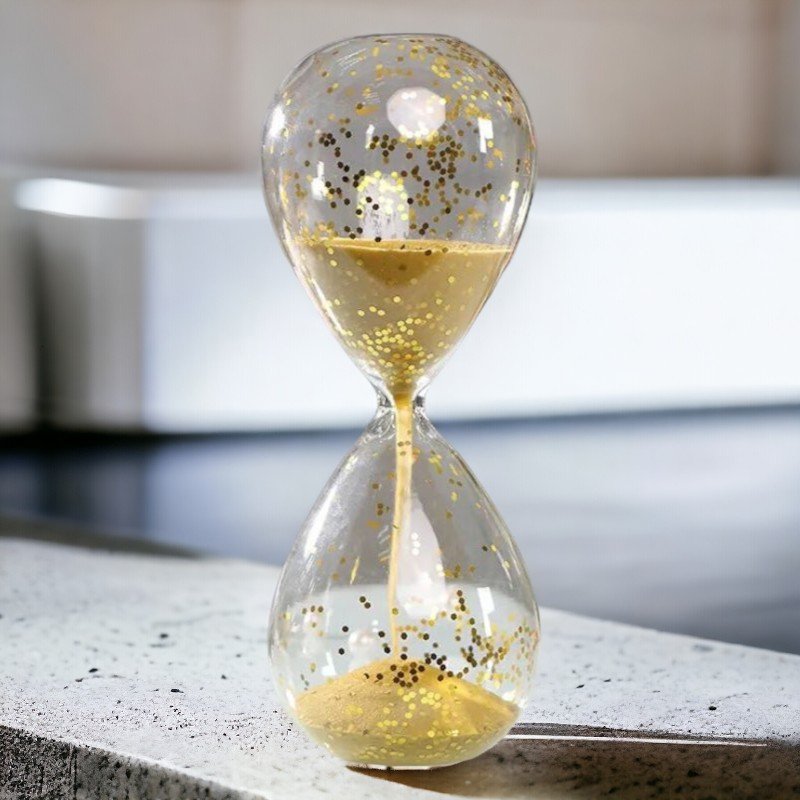
🛍️ Our pick
Gold Glitter Hourglass — Shimmer Sand Timer Gift
A gold glitter hourglass serves as a timeless decorative piece that symbolizes the passage of time, a concept deeply rooted in physics.
39,99 $
For the Magnetism Enthusiast
- Magnetic Balls 1000 Pieces (5mm): a set of neodymium spheres that can be shaped into molecular models, geometric art, or fidget sculptures. Most sets like this use N35 to N42 grade magnets, while premium builds push toward N52, the strongest commercially available neodymium grade.
- Super Precision Gyroscope: a precision-machined gyroscope that can spin on a string, a pencil tip, or even a single point of contact for 8 to 12 minutes depending on bearing quality and launch speed, a hands-on demonstration of angular momentum conservation.
For the Fluid Dynamics Fan
- Lava Lamp Night Light: the original lava lamp was invented by British entrepreneur Edward Craven Walker in 1963, and the slow convection currents inside remain one of the most visually mesmerizing demonstrations of fluid density and heat transfer available outside a physics lecture.
- Jellyfish Lava Lamp: a variation that uses suspended jellyfish silhouettes drifting through colored liquid, a softer, more decorative take on the same thermal convection principle.
For the Topology and Geometry Lover
- Klein Bottle: a hand-blown glass sculpture of the famous non-orientable surface first described by German mathematician Felix Klein in 1882. It has no inside or outside, a mind-bending gift for anyone who geeked out over topology electives.
For the Thermodynamics and Energy Nerd
- Solar Stirling Engine: a working model of the engine Scottish clergyman Robert Stirling patented in 1816, powered entirely by sunlight and temperature differential rather than combustion. It’s one of the few gifts that actually runs on physics your graduate studied.
- Black Galileo Thermometer: a temperature-reading instrument based on buoyancy principles dating back to Galileo Galilei’s 17th-century experiments with fluid density.
For the Astronomy and Space Enthusiast
- World Globe Light: an illuminated globe that doubles as ambient lighting and a geography centerpiece, a nice nod to Earth’s actual diameter of roughly 7,918 miles for anyone who loves putting numbers to scale.
- Space Projector: projects a rotating starfield or nebula pattern across the ceiling, turning a dorm room or first apartment into a planetarium.
For the Minimalist Who Wants Function With Flair
- Binary Watch: tells time in binary code, a subtle, wearable nod to computational thinking that most non-physics friends won’t even notice until it’s explained.
⭐ Key takeaway
If you only remember one rule, pick a gift that demonstrates a physical principle visually rather than one that requires measurement, calibration, or technical maintenance. That’s the line between ‘thoughtful decor’ and ‘another piece of lab gear.’
How Do You Choose by Personality: Theorist vs Tinkerer vs Decorator?
The right gift depends heavily on whether your graduate loves abstract concepts, hands-on mechanics, or pure aesthetics. A theorist who spent four years buried in quantum mechanics proofs will appreciate something like the Klein Bottle, an object that embodies a concept rather than a mechanism. A tinkerer who always wanted to build their own experiments will get more satisfaction from a Solar Stirling Engine they can watch run and explain to guests. A decorator who wants their apartment to look like a design magazine spread will lean toward a World Globe Light or a Lava Lamp for ambient, conversation-friendly lighting.

How Much Should You Spend on a Physics Graduate’s Gift?
A meaningful graduation gift for a physics major typically falls between $40 and $280, depending on the relationship and the complexity of the piece. Close family members and parents often spend $100 to $280 on standout statement pieces, while friends and extended family tend toward the $40 to $100 range for smaller desk items like a Galileo thermometer or a set of magnetic balls. For comparison, general US graduation gift surveys from outlets like the National Retail Federation consistently show average per-gift spending in the $50 to $150 range for college graduates, so a $150 to $200 statement piece lands well above average without feeling excessive.
💡 Did you know?
The strongest commercially available neodymium magnets, graded N52, were only developed and standardized widely in the past two decades, meaning the magnetic desk toys your graduate can buy today are measurably stronger than anything available when their parents graduated college.
Our Take
I’ve spent a decade sourcing kinetic and scientific objects for people who already own every piece of standard lab gear, and the pattern is consistent: graduates don’t want more tools, they want permission to enjoy physics again without a grade attached. In my experience, the gifts that get the most enthusiastic reactions aren’t the most expensive ones, they’re the ones that make someone stop mid-conversation and say ‘wait, how does that work?’ A spinning gyroscope or a slow-moving lava lamp does that better than any branded mug ever will. If I had to pick one gift for a graduate who already has everything, it would be the Super Precision Gyroscope, because it’s small enough for a dorm shelf, durable enough to survive a move across the country, and genuinely demonstrates angular momentum in a way that still impresses physicists.

Frequently Asked Questions
Graduation marks the end of four years spent surrounded by lab equipment, so the most memorable gift is one that lets your physics major fall back in love with the wonder of physics, not the grind of studying it. Whether you choose a World Globe Light for their new apartment or a Klein Bottle for their bookshelf, the goal is the same: give them something that makes physics feel like a source of delight again, not another assignment.
Sources
- National Retail Federation, annual graduation spending surveys
- Encyclopedia Britannica, entry on Robert Stirling and the Stirling engine (1816)
- Britannica and historical design archives on Edward Craven Walker and the invention of the lava lamp (1963)