
The essentials:
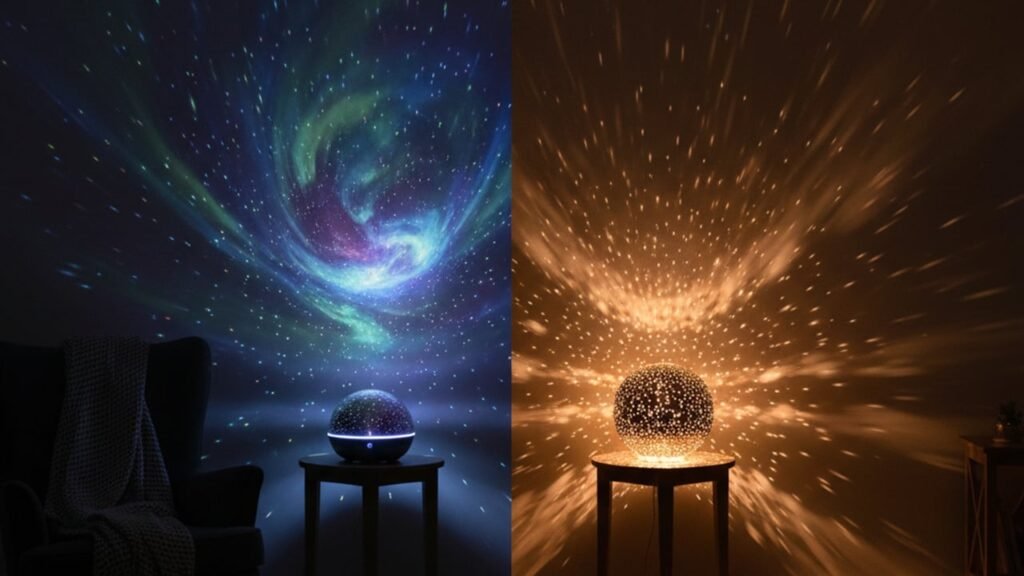
- Galaxy projectors cast moving light patterns (stars, nebulae, auroras) across walls and ceilings using LED or laser diodes, filling a whole room with motion.
- Star lamps (including Himalayan salt lamps and LED star lights) glow from a single fixed point, warming a corner rather than covering a space.
- In our US range, galaxy projectors run from $50.99 to $329.99, while star lamps and salt lamps run from $24.99 to $179.99 depending on size and materials.
- Neither device has proven therapeutic properties, they’re decorative lighting pieces, not wellness tools.
Choosing between a galaxy projector and a star lamp sounds trivial until you’re standing in a shop (or scrolling at midnight) trying to decide which one will actually transform your bedroom into something worth photographing. As someone who’s spent years curating scientific objects for the home, I get asked this constantly, usually by someone buying a gift for a teenager or redecorating an apartment in Brooklyn. Let’s settle it properly, with the physics and the practicalities both on the table.
📋 Table of contents
- What’s the Fundamental Difference Between a Galaxy Projector and a Star Lamp?
- How Realistic Is the Visual Effect of Each?
- Which Covers More Space: Projector or Lamp?
- Customization: Colors, Patterns and Movement
- Which Is Easier to Set Up and Use Day to Day?
- How Do Prices Compare in the US Market Right Now?
- Which One Suits Your Room?
- Our Verdict
- Frequently Asked Questions
What’s the Fundamental Difference Between a Galaxy Projector and a Star Lamp?
A galaxy projector casts moving light patterns across your walls and ceiling using a rotating lens paired with LED or laser diodes, while a star lamp simply glows from one fixed point and colors the room around it rather than projecting imagery elsewhere. The projector turns your entire ceiling into a canvas, whereas the lamp acts more like a soft, stationary nightlight with a shape. Most galaxy projectors on the US market use 1 to 3 watt diodes rotating at roughly 2 to 6 RPM, which is slow enough to feel dreamlike rather than disco-ball frantic.
The LED itself, incidentally, was invented in 1962 by Nick Holonyak Jr at General Electric, originally producing only a dim red glow. Everything that followed, including the vivid blues and greens in today’s galaxy projectors, builds on that single breakthrough.
💡 Did you know?
Himalayan salt lamps are carved from rock salt extracted at Khewra Salt Mine in Pakistan, one of the largest salt mines in the world, with deposits believed to date back over 800 million years. The pink hue comes from trace minerals like iron oxide, not any added dye.
How Realistic Is the Visual Effect of Each?
Galaxy projectors win decisively on realism and movement, since their rotating lens creates a drifting starfield effect that static lamps simply cannot replicate. A star lamp produces a fixed, warm glow that’s atmospheric but unchanging, while a projector’s slow rotation mimics the apparent movement of stars across a night sky, an effect astronomers call diurnal motion. That said, cheaper projectors sometimes show visible pixelation or a slightly plasticky star shape up close, something worth checking in reviews before buying.
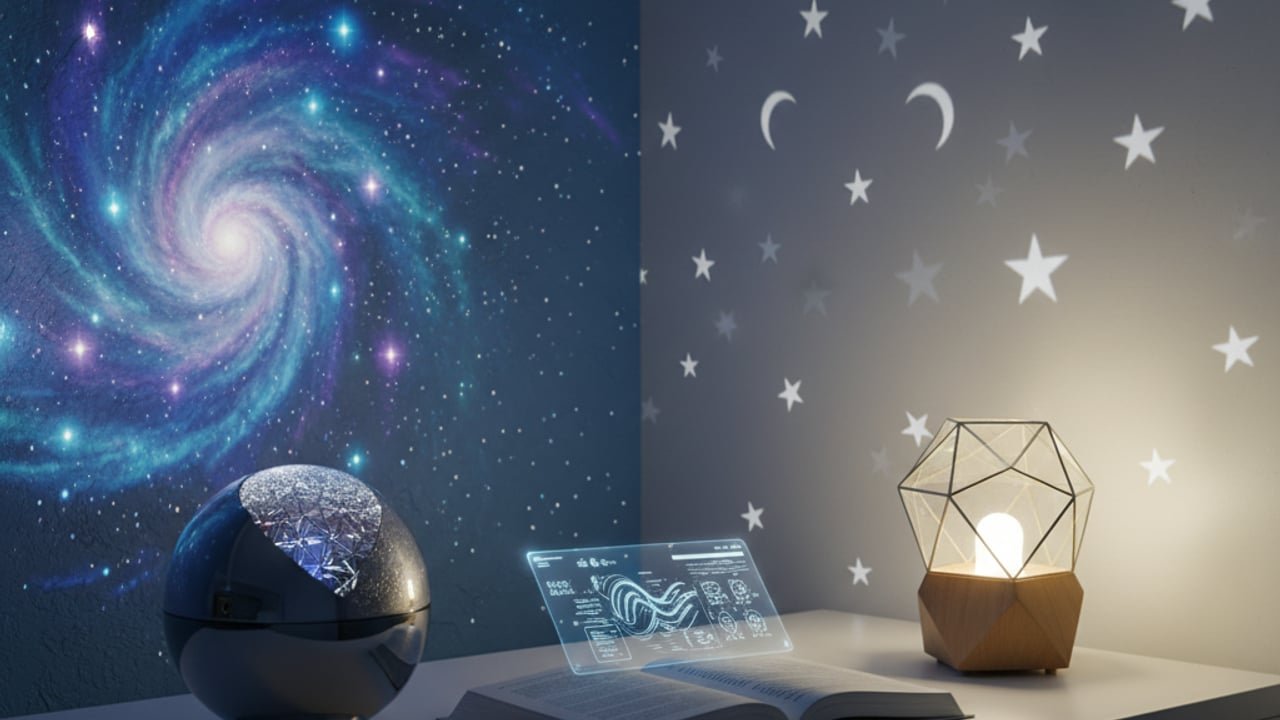
Salt lamps and crystal-style lamps have their own charm through the Tyndall effect, the way light scatters through imperfections in a translucent material, giving each lamp a slightly unique glow. It’s a lovely bit of physics, but it’s decorative, not diagnostic or medicinal, whatever certain online listings imply.
Which Covers More Space: Projector or Lamp?
A galaxy projector typically illuminates 10 to 20 square meters of ceiling and wall space from a distance of 3 to 5 meters, while a star lamp’s ambient glow usually reaches only a 1 to 2 meter radius around the base. Most star lamps produce a cozy rather than functional light level. If you want one device to transform an entire bedroom ceiling, the projector does the heavy lifting; if you want a soft pool of light on a bedside table, the lamp is built for exactly that job.

🛍️ Our pick
Galaxy Night Light Projector Infinity
The Galaxy Night Light Projector Infinity offers immersive cosmic visuals with dynamic effects for a transformative room ambiance.
$114.99 Shop now →
Customization: Colors, Patterns and Movement
- Galaxy projector: multiple color modes, nebula cloud effects, adjustable rotation speed, often Bluetooth speaker and app or remote control included.
- Star lamp: usually one to three fixed color settings, sometimes a dimmer, rarely any motion.
- Himalayan salt lamp: single warm amber tone determined by the stone itself, with brightness controlled by bulb wattage rather than color choice.
If you’re after a gift that doubles as a mini light show, something like the Tesla Coil Music set makes an excellent companion piece, pairing flickering plasma arcs with synced sound for a genuinely different kind of ambiance.
Which Is Easier to Set Up and Use Day to Day?
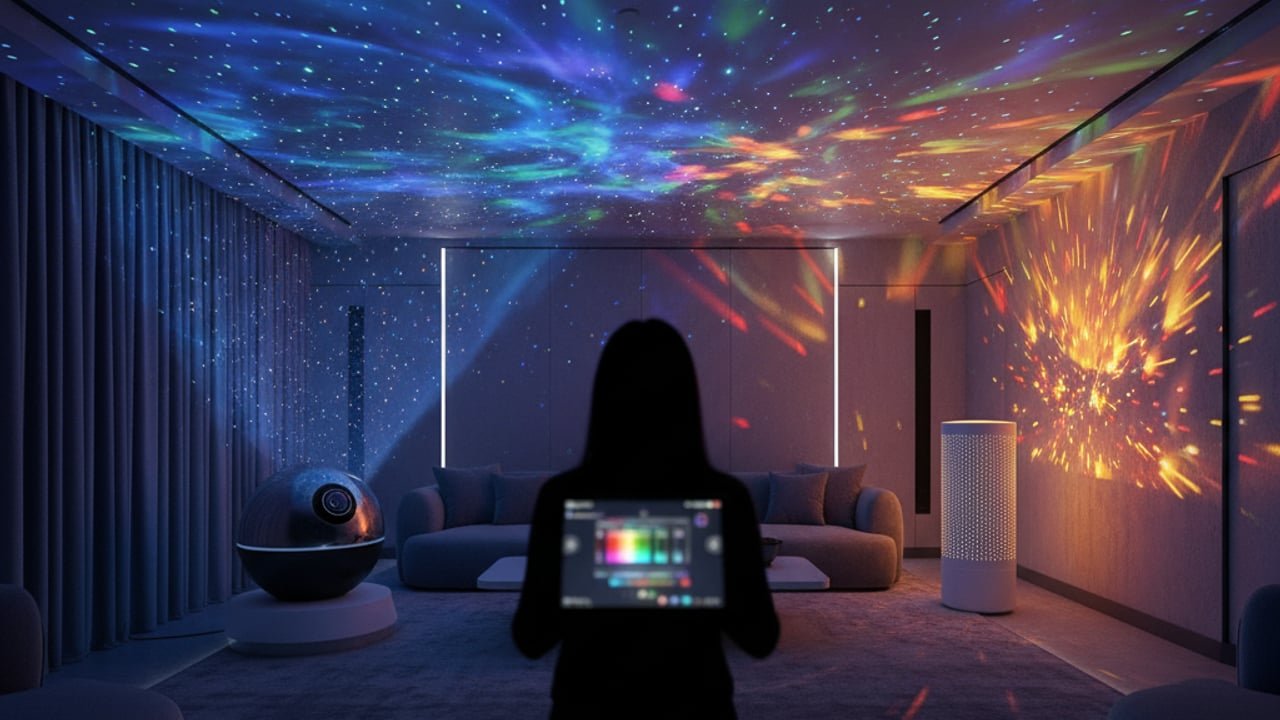
Star lamps are plug-and-play within seconds, needing nothing more than an outlet, while galaxy projectors require a little more thought around positioning distance and ceiling height to get the sharpest image. A projector placed too close to the ceiling will produce a tight, overly bright star cluster, whereas the sweet spot of 2 to 3 meters gives the most convincing spread.
⭐ Key takeaway
To remember: if you’re buying for a child’s bedroom, check the projector has a built-in timer or auto-off function, since most models run 1 to 4 hours before shutting down automatically, which is gentler on sleep routines than a lamp left glowing all night.
How Do Prices Compare in the US Market Right Now?
In 2026, galaxy projectors in our US range start at $50.99 and climb to $329.99 for premium models, while star lamps range from $24.99 for a small LED star night light to $179.99 for a large Himalayan salt lamp. Price in this category correlates more with build quality and diode lifespan than with raw aesthetic appeal, so a $60 projector from a reputable seller often outperforms a $90 one with a flashier box. LED components in both product types typically last 20,000 to 50,000 hours according to general lighting industry estimates, meaning either device should outlast several years of regular evening use.

Which One Suits Your Room?
- Kids’ bedroom: galaxy projector, for the wow factor and bedtime wind-down ritual.
- Home office or desk: star lamp or salt lamp, for subtle warmth without distracting movement.
- Living room or home cinema corner: galaxy projector on a low setting, paired with something like the Magnetic Solar System for a daytime space theme that doesn’t need power at all.
- Meditation or reading nook: star lamp, since constant gentle light suits focus better than drifting patterns.
For anyone who likes rotating displays generally, browsing the full Cool Gadgets range reveals quite a few other conversation starters, including the Storm Glass Weather Predictor, which brings a different kind of quiet drama to a shelf without using any electricity at all.
Our Verdict
I’ve tested both categories extensively over the years, and my honest take is this: galaxy projectors are better value as a statement piece and genuinely more fun to gift, while star lamps age more gracefully as a permanent fixture because there’s no motor or lens to eventually wear out. If forced to choose one for a first-time buyer, I’d lean toward the projector, since it delivers more immediate delight per dollar spent and works brilliantly as an icebreaker gift. Owning both isn’t overkill either, they solve different problems in the same room.
Frequently Asked Questions
Sources
- Encyclopaedia Britannica, entries on LED history and Khewra Salt Mine