
L’essentiel :
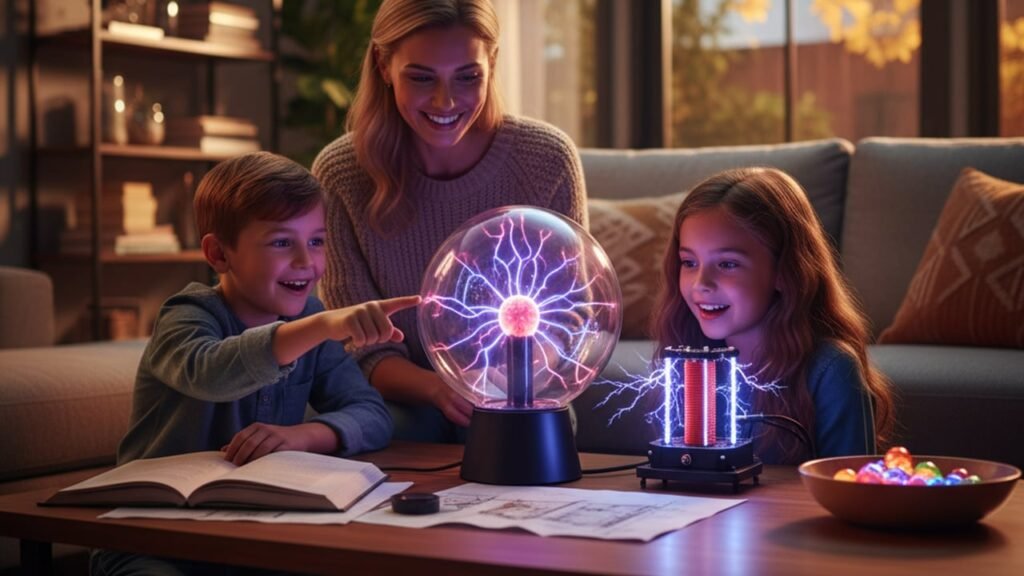
- A plasma ball is the safer, kid-friendly choice because it runs on low current (often under 1 milliamp) and is designed for hands-on touching.
- A real Tesla coil, even a tabletop version, generates 50,000 to 100,000 volts and produces sparks that can cause painful RF burns, so it’s an observe-only device for families.
- For pure visual ‘wow’ with minimal supervision, the plasma ball wins; for pure spectacle under strict adult control, the Tesla coil wins.
- If your goal is a science demo kids can actually touch and talk about at school the next day, skip both and consider a plasma ball alternative that’s built for handling.
You’ve seen both on YouTube: a glowing orb with purple lightning dancing toward your fingertip, and a screaming tower of electricity throwing sparks across a room. Both look like something out of a sci-fi movie. Only one of them belongs on a kid’s bedroom shelf, and the difference comes down to physics most parents have never had explained clearly.
📋 Table of contents
What Is a Plasma Ball, Exactly?
A plasma ball is a sealed glass sphere filled with a mix of noble gases that glow when excited by a high-frequency, low-current electrical field. Inside the glass, a small transformer converts standard 120V household current into roughly 2,000 to 5,000 volts oscillating at 20,000 to 35,000 Hz, which is why you can safely touch the outside of the globe and watch the plasma filament follow your fingertip. The high frequency of the current means it travels along the surface of your skin rather than penetrating deeper tissue, a physics principle called the skin effect, which is the main reason plasma balls are considered touch-safe for everyday use. The device was popularized commercially in the 1970s after inventor Bill Parker patented a tabletop version in 1976, turning a physics curiosity into a mass-market novelty.
💡 Did you know?
The eerie purple-pink glow inside a plasma ball comes from the same ionization process that creates the aurora borealis, just contained in a six-inch globe instead of the upper atmosphere.
What Is a Tesla Coil, Exactly?
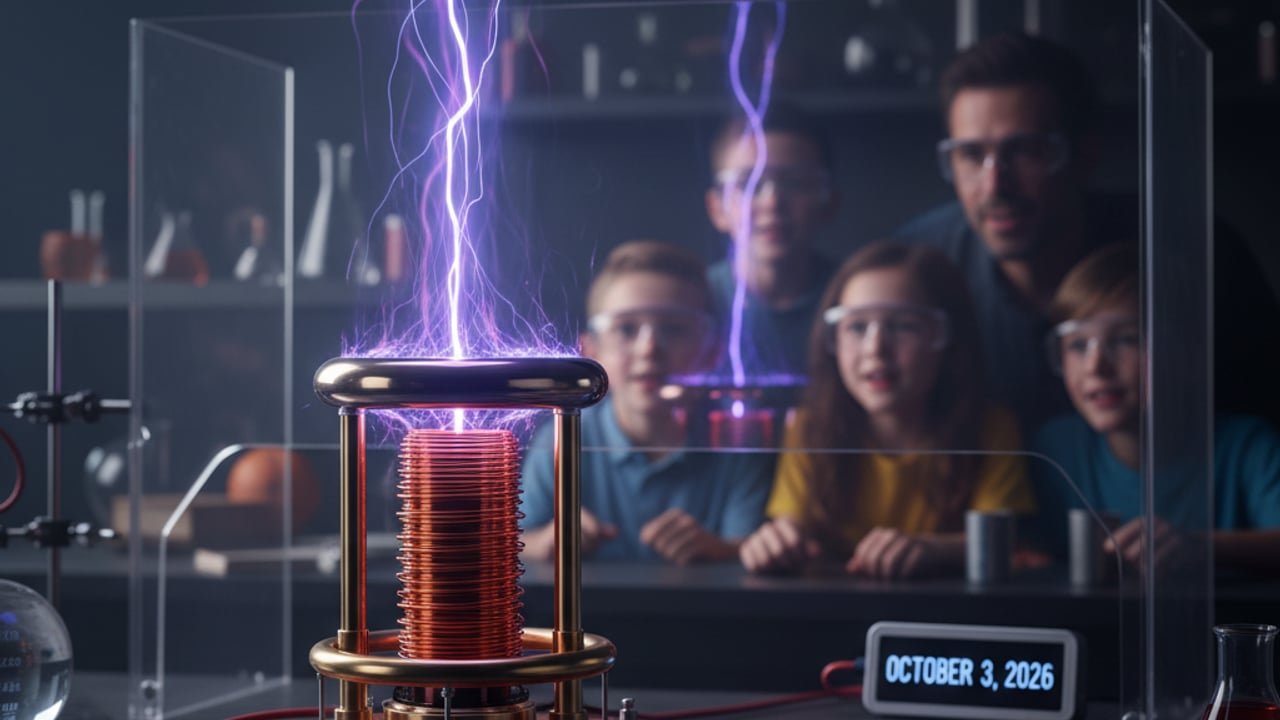
A Tesla coil is a resonant transformer circuit invented by Nikola Tesla in 1891 to generate extremely high-voltage, low-current alternating current for wireless power experiments. Unlike a plasma ball, a real Tesla coil is not sealed, and even a small desktop educational version typically produces 50,000 to 100,000 volts with visible arcing sparks that jump through open air. Because the discharge is an open electrical arc rather than a contained gas reaction, a Tesla coil demo is meant to be watched from a safe distance, never touched, even by adults who understand the physics behind it. Tesla’s original research coil at his Colorado Springs laboratory is estimated to have reached voltages in the millions, a scale that still informs how modern coil enthusiasts build and test their machines.
⭐ Key takeaway
Voltage alone doesn’t determine danger, current and containment do. A plasma ball’s sealed glass and microamp-range current make it hands-on safe, while a Tesla coil’s open arc and higher current output make it a look-but-don’t-touch spectacle.
Plasma Ball vs Tesla Coil: Which Is Safer for Kids?
The plasma ball is the clear winner for family safety because its current output rarely exceeds 1 milliamp, well below the threshold the Consumer Product Safety Commission associates with painful shock. A Tesla coil, even a compact tabletop build, can deliver RF burns if skin contacts the arc directly, and the exposed high-voltage coil itself poses a shock risk if a curious child touches the primary circuit. Most commercially sold plasma balls are built with sealed glass enclosures specifically so children can interact with the surface without any exposure to live current, something no open-air Tesla coil can offer. That said, neither device should be treated as a toy for unsupervised toddlers. We recommend plasma balls for children ages 8 and up with adult supervision nearby, and Tesla coil demonstrations only as an adult-run spectacle that kids watch rather than approach.

🛍️ Our pick
Drone With Camera For Kids
Un drone avec caméra permet aux enfants d’explorer les principes de physique en vol tout en capturant des images aériennes lors de démonstrations scientifiques à la maison.
94,99 $
- Plasma ball: sealed, low current, touch-safe surface, suitable for supervised kids 8+
- Tesla coil: open arc, higher current, observe-only, adults operate, kids watch from a distance
Which One Is More Fun for a Home Science Demo?
For sustained, repeatable fun, the plasma ball wins because kids can interact with it directly every time, moving their fingers across the glass to bend the plasma filaments on command. A Tesla coil delivers a bigger one-time wow moment with dramatic sparks and a buzzing hum that fills a room, but it requires setup time, ventilation for ozone byproducts, and constant adult supervision that makes it impractical for spontaneous play. If the goal is a centerpiece kids return to again and again during a sleepover or birthday party, the plasma ball’s repeatable interactivity beats the Tesla coil’s one-off spectacle. Plenty of families pair a plasma ball with other glowing conversation pieces, like a space projector that turns a bedroom ceiling into a starfield, to build a full sensory demo night without any shock risk at all.
💡 Did you know?
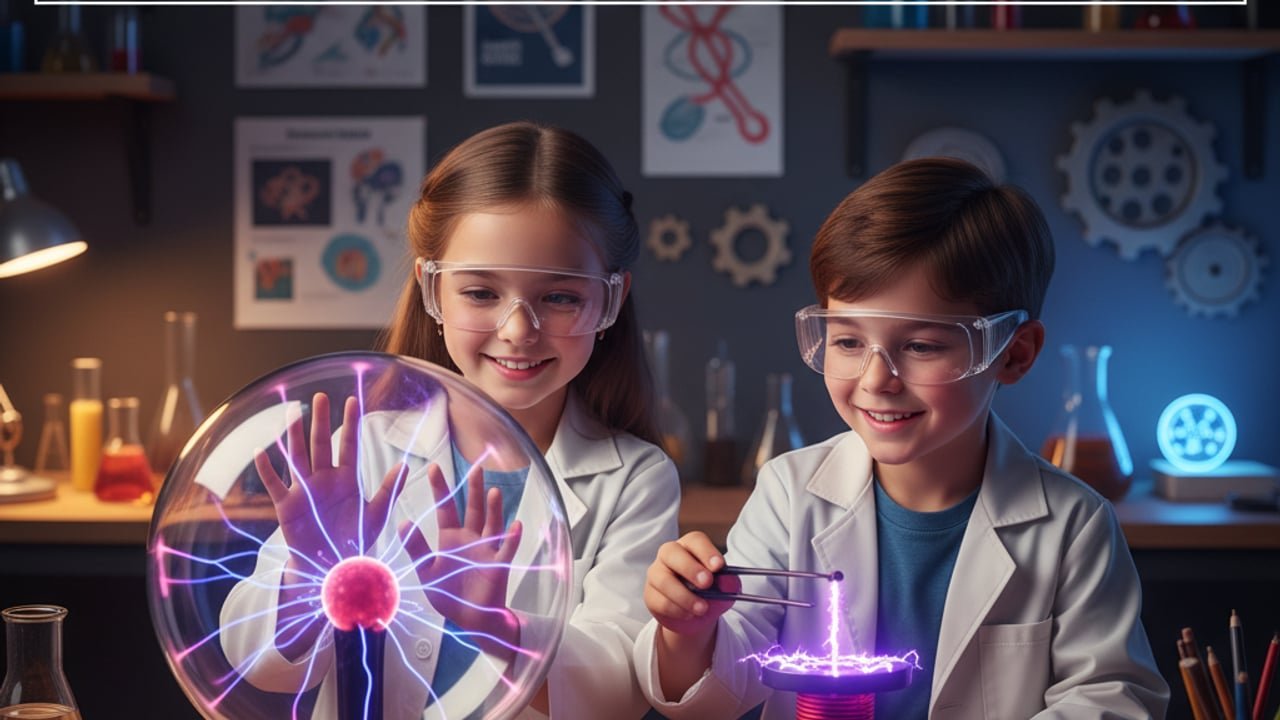
A single tabletop Tesla coil spark can reach temperatures hotter than the surface of the sun for a fraction of a second, even though the total energy involved is tiny compared to a household appliance.
Cost and Accessibility in 2026
A quality plasma ball typically costs between $20 and $60, while a properly built educational Tesla coil, including the safety enclosure most responsible sellers now include, runs $150 to $280 or more in 2026. The price gap reflects build complexity: a Tesla coil needs a hand-wound secondary coil, a spark gap or solid-state driver, and tuning capacitors, while a plasma ball is largely mass-produced with standardized glass globes and transformer boards. For most families comparing the two on a gift budget, the plasma ball delivers more interactive value per dollar, while a Tesla coil is better suited to a dedicated hobbyist or a classroom demonstration budget. If you’re shopping for a science-themed gift under $100 that still has serious visual impact, browsing a curated cool gadgets collection often turns up alternatives that split the difference between affordability and wow factor.
What Can Kids Actually Learn From Each Device?
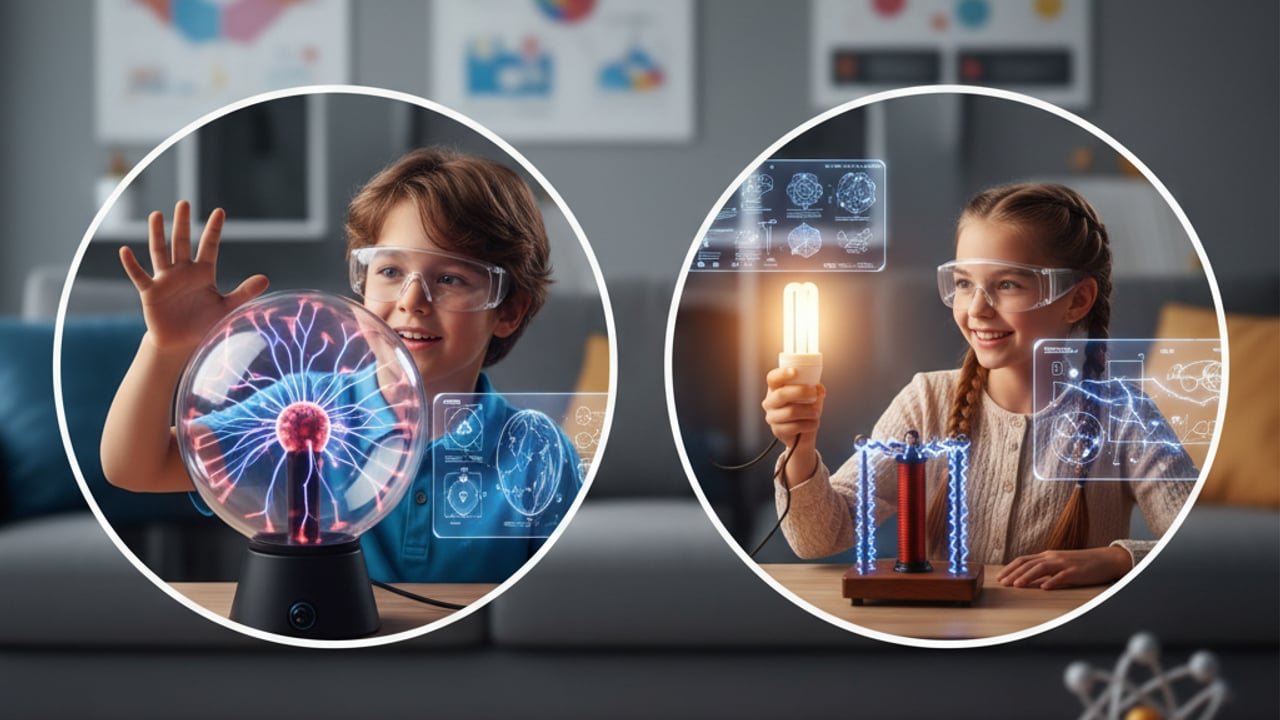
A plasma ball teaches basic concepts of ionization, electric fields, and conductivity in a way kids can test themselves by touching the glass with one finger versus an open palm and watching the filament behavior change. A Tesla coil teaches resonance, electromagnetic induction, and the history of wireless power transmission, concepts that are more abstract and better suited to older kids or teens already studying basic physics. Neither device should be presented as a certified lab instrument, both are educational and decorative novelties designed to spark curiosity rather than deliver scientifically precise measurements. For younger children who want something they can handle more freely while still learning about physical forces, a set of magnetic balls introduces magnetism hands-on, though these contain small parts and are recommended for ages 14 and up with adult supervision due to ingestion risk.
⭐ Key takeaway
Match the device to the child’s age and the level of supervision you can realistically provide. Plasma balls fit casual family science nights, Tesla coils fit planned, adult-led demonstrations only.
Our Verdict
After years of curating science-driven decor and gadgets, our take is straightforward: for 9 out of 10 households asking this exact question, the plasma ball is the better buy. It’s safer, cheaper, and more durable for repeated use, and it still delivers that unmistakable gasp the first time a kid sees the plasma filament bend toward their fingertip. A Tesla coil earns its place in a serious hobbyist’s workshop or a science museum’s demo cart, but as a home gift for curious kids, it asks for more risk and supervision than most parents want to manage. If you love the electric aesthetic but want something equally mesmerizing and fully touch-safe, a lava lamp night light or a precision gyroscope both deliver that same slow-motion, hypnotic science appeal without any voltage conversation at all.
FAQ
Sources
- U.S. Consumer Product Safety Commission, electrical safety guidelines for household devices
- Nikola Tesla, original 1891 Tesla coil patent and Colorado Springs experimental records
- Bill Parker, 1976 plasma globe patent filing, United States Patent Office